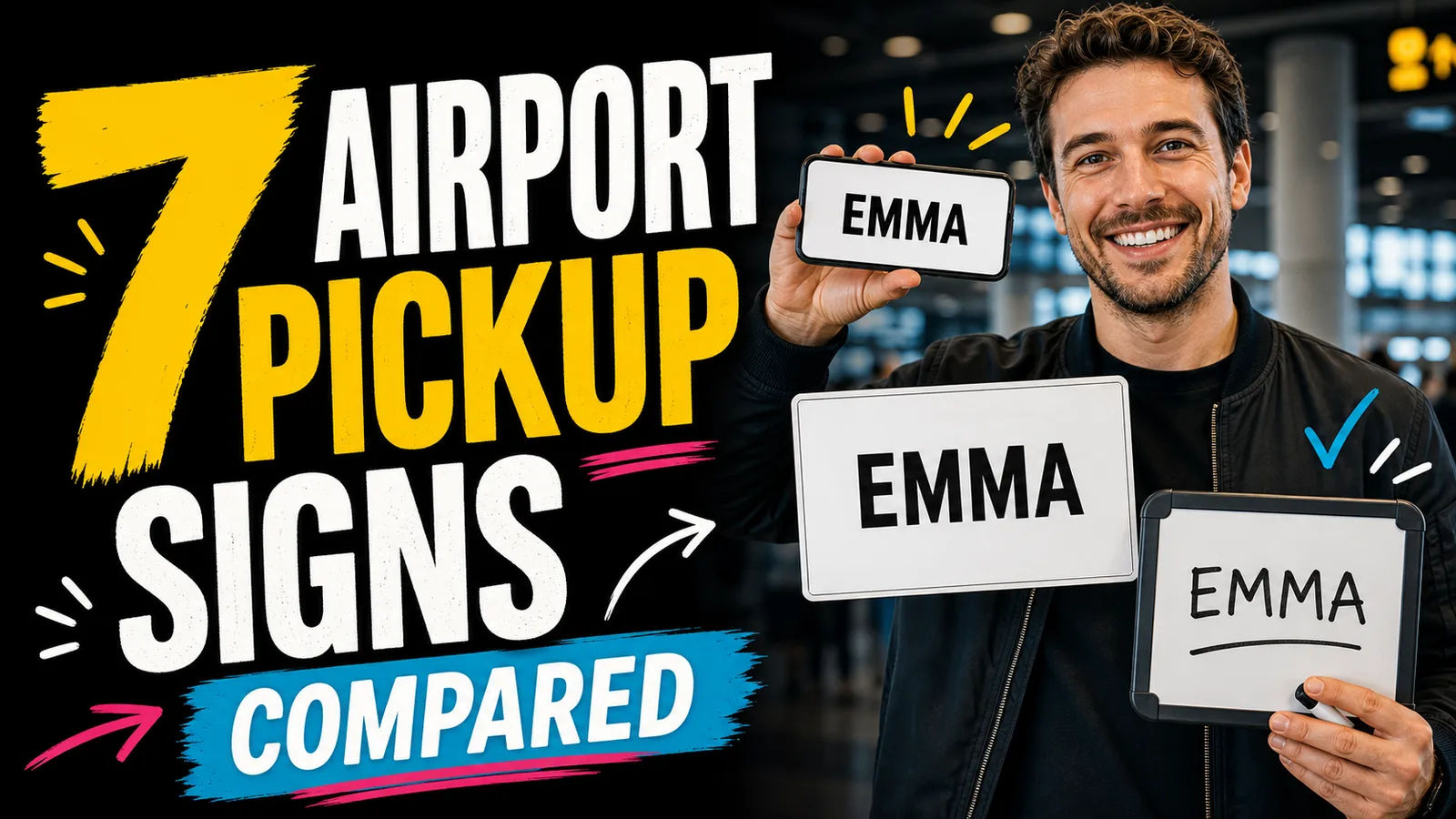
The best airport pickup sign is the one the arriving passenger can recognize in a few seconds. For most personal pickups, that means a phone with large fullscreen text or a simple printed sign. Professional drivers and frequent greeters may benefit from a rigid reusable board or tablet instead.
This guide compares seven practical formats by visibility, portability, setup time, reuse, and typical cost level. It does not rank individual products we have not tested; it helps you choose the right type of sign before you buy anything.
Airport pickup signs compared at a glance
| Sign type | Best for | Reusable | Visibility | Typical cost |
|---|---|---|---|---|
| Phone scrolling sign | One-off and changing pickups | Yes | Good at short to medium range | Free or low |
| Printed name board | Formal or branded pickups | No, unless laminated | Very good | Low |
| Dry-erase whiteboard | Repeat pickups with changing names | Yes | Good | Low |
| LCD writing tablet | Lightweight repeat use | Yes | Moderate | Low to medium |
| Acrylic light-up board | Dim arrivals areas and playful welcomes | Yes | Good in lower light | Medium |
| Folding or clipboard sign | Drivers carrying documents | Yes | Very good | Low to medium |
| Tablet display | Professional and multi-name pickups | Yes | Very good | Medium to high |
There is no universal winner. A chauffeur meeting new clients every day has different requirements from someone collecting a friend once after a late flight.
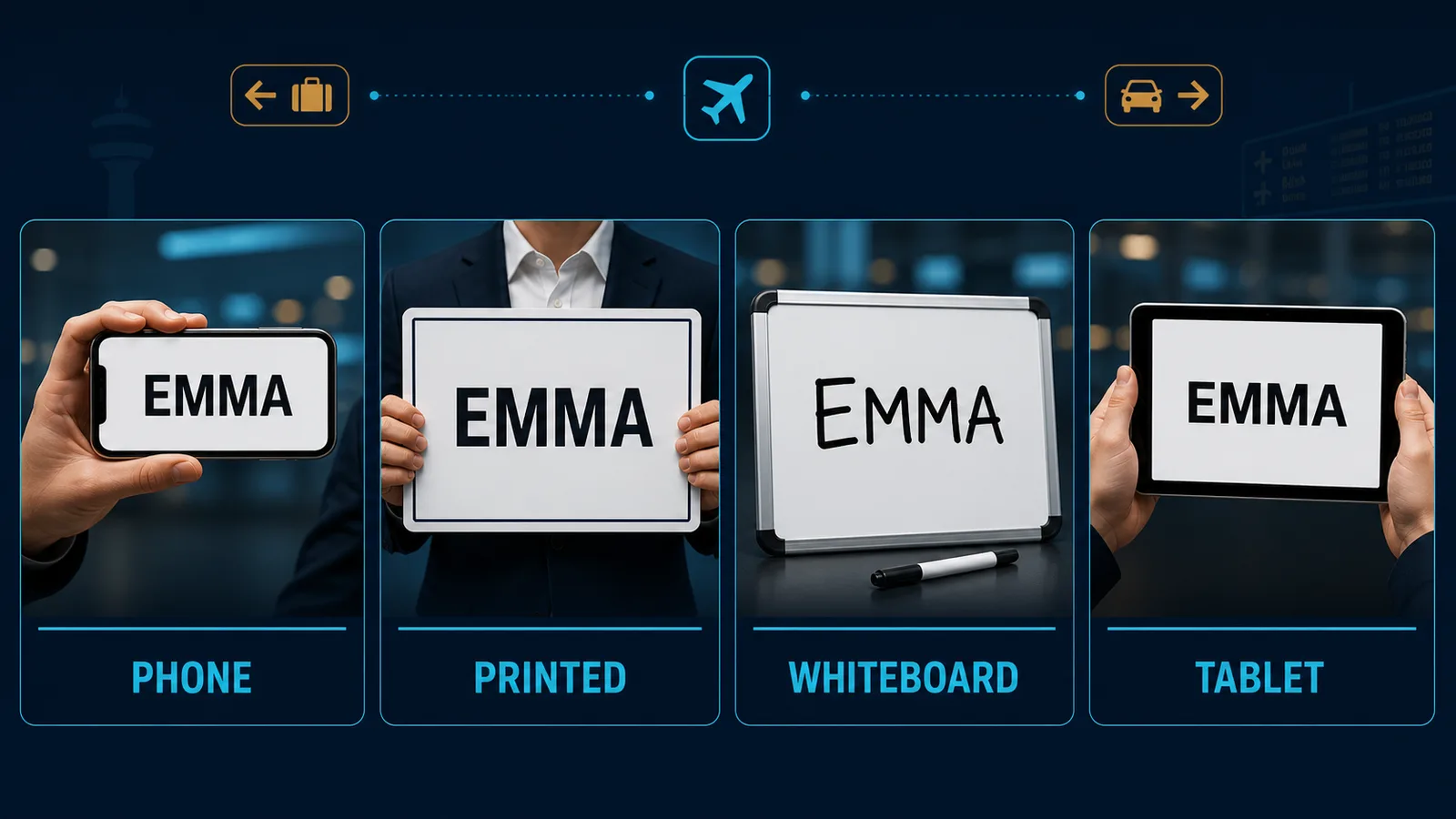
How we compared the options
We evaluated each format against the conditions that make airport pickup signs succeed or fail:
- Recognition: can the passenger understand it at a glance?
- Letter size: can it show a surname in genuinely large type?
- Contrast: does the name remain legible under bright terminal lighting?
- Portability: can you carry it alongside luggage or work equipment?
- Editability: can you change a delayed flight, passenger, or meeting point quickly?
- Repeat use: will it still be practical after dozens of pickups?
- Professional appearance: does it suit a client or hotel transfer?
We have not assigned precise prices because they change and vary by country. The cost levels above are intended to help you compare formats, not promise a current selling price.
1. Phone scrolling sign: best for speed and last-minute changes
A phone is the most convenient option when you already have the device and need a sign immediately. It works particularly well for a first name, surname, company name, or short phrase such as PICKUP FOR EMMA.
Its main advantage is editability. If the meeting point changes from Exit A to Exit B, you can update the display without finding a printer or marker. A dedicated phone pickup sign guide explains how to choose text size, contrast, and fullscreen settings.
The tradeoff is screen area. A phone is less suitable for long company names or for passengers who need to recognize the sign from across a very wide arrivals hall. Keep the message short and hold the screen in landscape orientation.
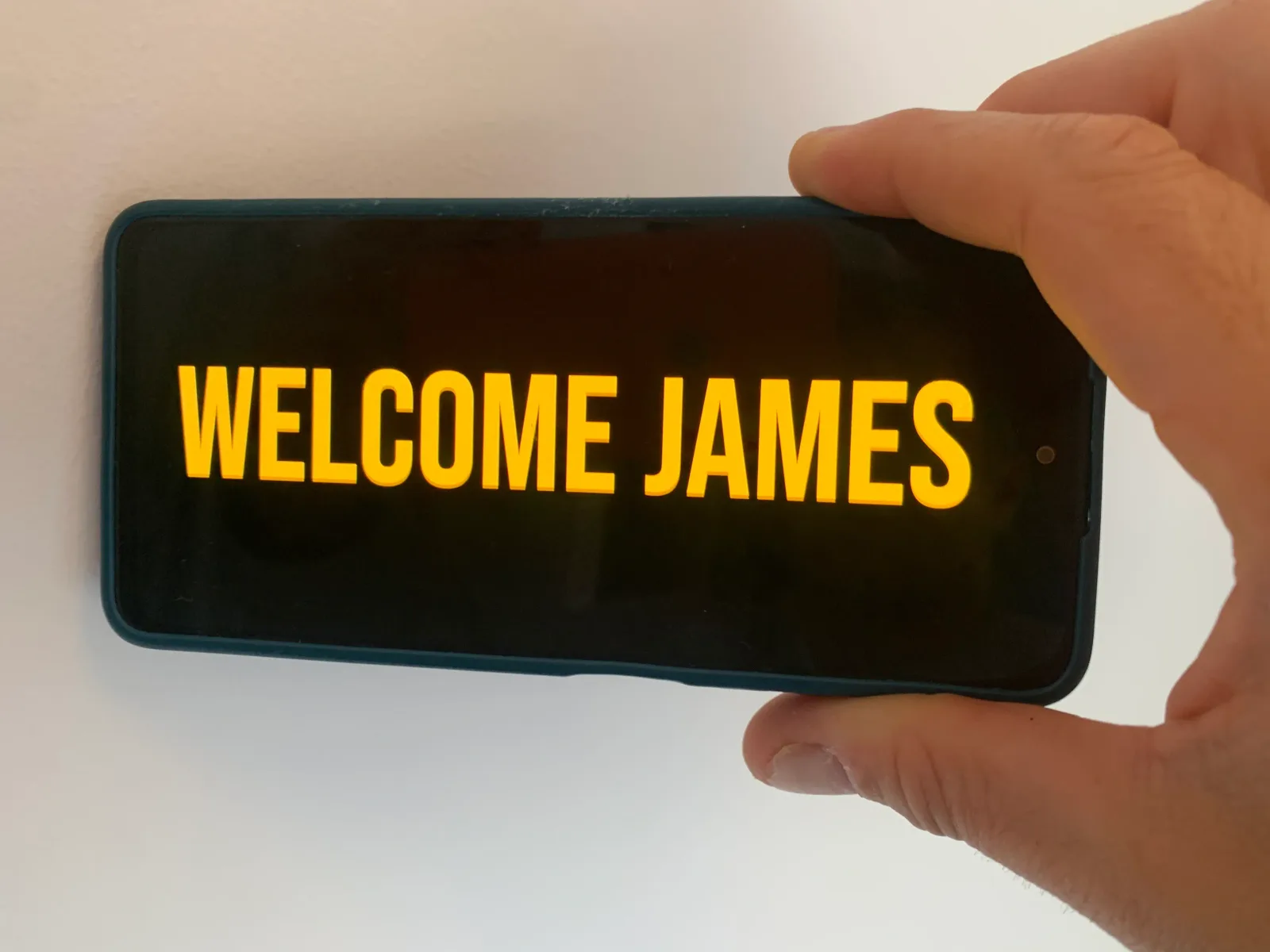
The one-hour PICKUP HERE loop below shows how a short scrolling message remains readable when it repeats continuously. Notice the large lettering, strong contrast, and uncluttered wording. For a real passenger pickup, replace the generic phrase with the passenger's name whenever possible; a specific name is easier to recognize in a busy arrivals hall.
Choose this when: the pickup is occasional, the message may change, and you want to avoid buying another object.


2. Printed name board: best for formal presentation
A rigid printed board looks deliberate and gives the name plenty of space. It is a strong choice for a wedding transfer, conference group, hotel guest, or executive pickup where presentation matters.
For repeat branding, consider a reusable holder with printed inserts rather than printing a completely new board every time. Matte paper or card is generally easier to read under overhead lights than a glossy surface that creates reflections.
The downside is inflexibility. A spelling correction or passenger change means printing another insert. A printed board is also one more item to protect from bending while traveling to the terminal.
Choose this when: the passenger details are confirmed and a formal or branded appearance matters more than quick edits.
3. Dry-erase whiteboard: best low-cost reusable sign
A compact whiteboard is simple, inexpensive, and easy to reuse. It is particularly practical for families, volunteers, tour coordinators, and independent drivers who handle changing names but do not need a digital screen.
Look for a board with:
- a rigid frame that can be held with one hand
- a matte or low-glare surface
- enough width for a surname in large block letters
- an attached marker and eraser
- a dark, broad-tip marker rather than a fine pen
Very small lap boards can be convenient to carry but leave too little room for readable lettering. Measure the usable writing area, not just the outer dimensions.
See reusable whiteboards on AmazonChoose this when: names change frequently and you want a durable option without charging batteries.
4. LCD writing tablet: best for light packing
An LCD writing tablet is thin, light, and quick to erase. It can fit into a work bag more easily than a framed whiteboard and does not need ink refills.
However, many writing tablets prioritize low power use rather than brightness. Their lines may look clear nearby but become harder to spot under strong terminal lighting or from across the arrivals barrier. Before buying, check the usable screen dimensions, line contrast, erase lock, and whether the writing remains visible from an angle.
Compare LCD writing tablets on AmazonChoose this when: low weight is the priority and the passenger will pass reasonably close to you.
5. Acrylic light-up board: best for lower-light arrivals
Light-up acrylic writing boards use illuminated edges to make marker writing stand out. They can be eye-catching for evening pickups, welcome-home moments, and informal events.
They are less naturally suited to formal driver work. Decorative lighting, multiple colors, and handwritten lettering can look playful rather than professional. Battery life and power method also matter if you plan to hold the board away from a socket.
Choose a simple single-color message and lower the brightness if the display creates glare. More light does not automatically mean better readability.
See light-up acrylic boards on AmazonChoose this when: visibility in a dim setting and a celebratory appearance matter more than formal presentation.
6. Folding or clipboard sign: best for working drivers
A folding sign holder or clipboard-style board combines a rigid display with storage for passenger details, parking information, or transfer paperwork. The face can hold printed inserts while the rest of the kit stays organized.
This format is not exciting, but that is often an advantage. It is dependable, does not require power, and can look professional with a clean template. Check the weight and hinge quality if you expect to carry it for long periods.
Browse rigid clipboard sign options on AmazonChoose this when: you perform pickups as part of your work and want the sign and documents in one place.
7. Tablet display: best for frequent professional pickups
A tablet offers more screen area than a phone while keeping the same ability to change names instantly. It can show large type, a simple company identifier, or multiple passenger names without carrying paper inserts.
The higher price only makes sense if you already own the tablet or use it regularly for work. It is also heavier to hold, more valuable to expose in a crowded terminal, and dependent on battery charge. A protective case with a hand strap is usually more practical than a tabletop stand for arrivals use.
See tablet cases with hand straps on AmazonChoose this when: you handle regular client pickups and need both a larger display and instant editing.
Which airport sign should you choose?
Use this shortcut:
- Picking up a friend or relative once: use your phone.
- Meeting a business guest with confirmed details: use a printed board.
- Changing names several times a month: use a dry-erase board.
- Packing as lightly as possible: consider an LCD writing tablet.
- Planning a fun evening welcome: consider an acrylic light-up board.
- Working as a driver with paperwork: use a clipboard sign holder.
- Handling frequent premium transfers: use a tablet you already own.
If you are still deciding what the sign should say, see these airport pickup sign ideas. Whichever format you choose, the name should remain the largest and clearest element.
What to check before buying a physical pickup sign
Usable display area
Product dimensions can include the frame, handle, or bezel. Check the area where the actual name will appear. Test the longest surname you expect to display rather than a short example word.
Glare and viewing angle
Airport lighting is bright and comes from several directions. Glossy boards and low-contrast LCD surfaces can look fine in a product photo but reflect overhead lights in practice.
One-handed use
You may also be holding a phone, parking ticket, coat, or passenger details. A sign that requires two hands becomes inconvenient quickly.
Power and battery life
For illuminated or digital options, verify whether the device has a rechargeable battery, replaceable cells, or must remain connected by USB. Bring a power bank only when the extra cable will not make the setup awkward.
Airport rules and courtesy
Use the designated meeting area, keep exits and sightlines clear, and follow staff instructions. Avoid flashing effects or extreme brightness that could distract other passengers.
Our practical recommendation
Do not buy a physical sign for a single pickup unless it solves a real visibility or presentation problem. A phone is faster, editable, and already in your pocket. You can turn it into a scrolling LED display in a few minutes.
A physical sign becomes worthwhile when you repeat the task, require a larger readable area, or need a consistent professional appearance. In that case, a dry-erase board is the safest general-purpose choice, while a tablet is the most flexible premium option.